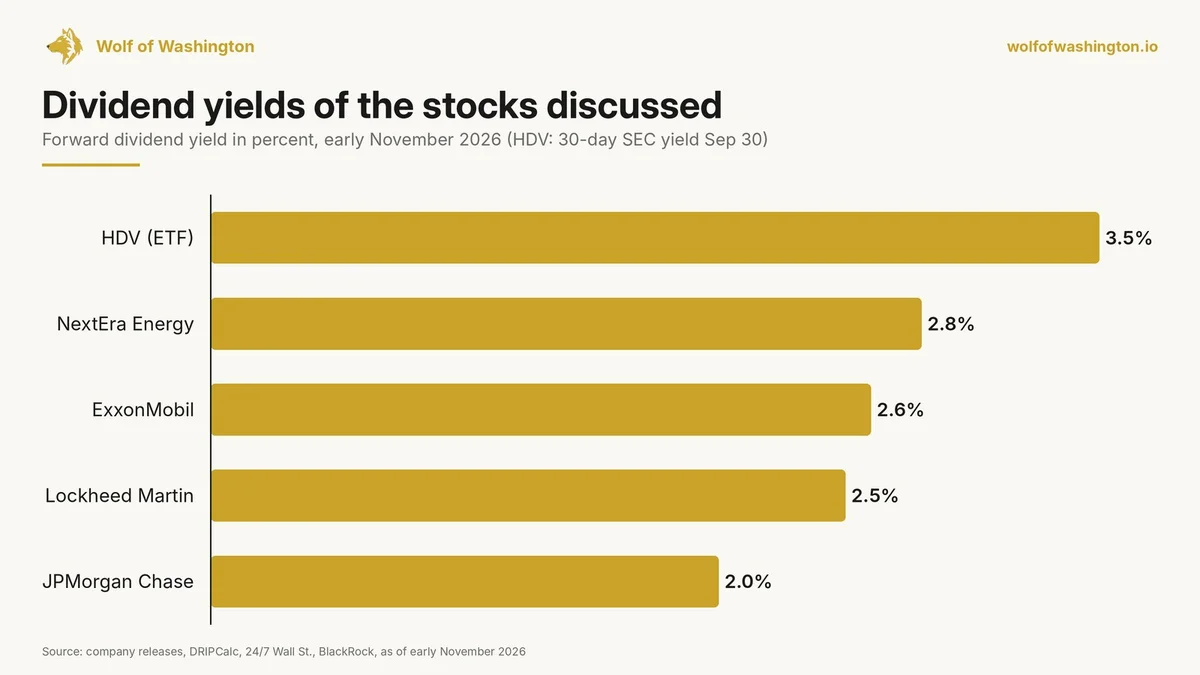
Dividend stocks in 2026 are equity investments in companies that distribute regular cash payments to shareholders — and congressional trading data, the legally required public disclosures of all 535 U.S. lawmakers' stock transactions, reveals that the most informed investors in Washington are loading up on dividend-paying sectors that offer both income and inflation protection.
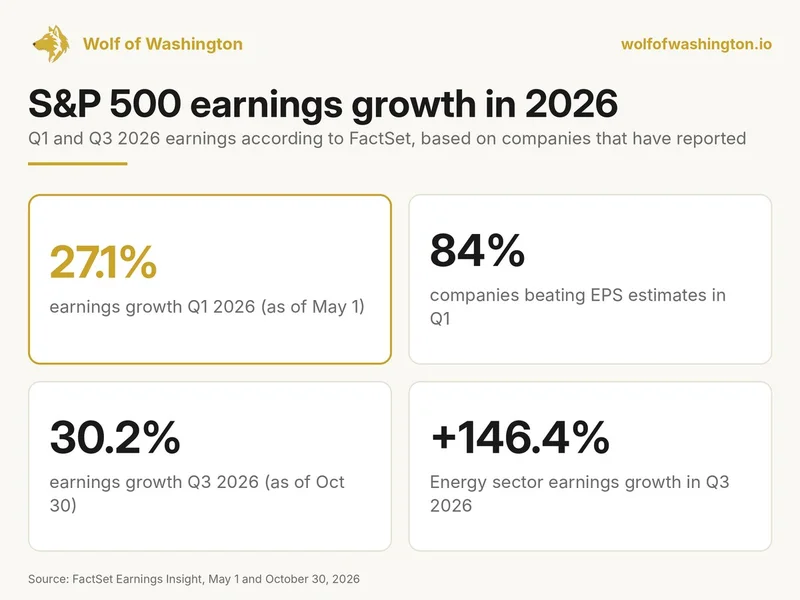
With markets shifting focus from geopolitical headlines to Q1 earnings results, dividend-paying sectors like energy, defense, and financials are taking center stage. Investors who track congressional disclosures through Wolf of Washington can see exactly which high-yield positions lawmakers were building in Q1 — before earnings confirmed the thesis.
Why Dividend Stocks Are Especially Attractive in 2026
Three structural reasons dividend stocks outperform in the current environment:
- Inflation protection: Companies that sustain dividends through inflation cycles have strong pricing power and free cash flow — the two attributes most resilient to rising input costs
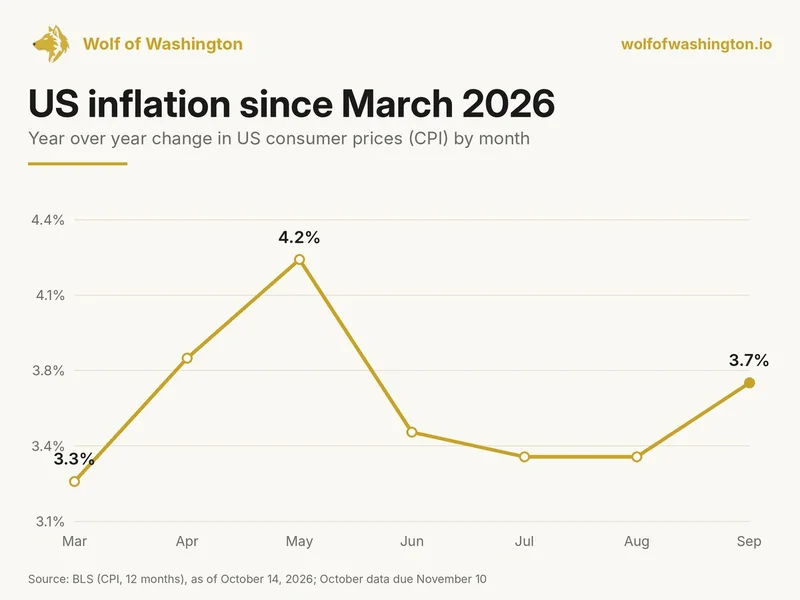
- Rate competition: The US 10-year Treasury yield stood near 4.86% on November 6, 2026, after the Federal Reserve raised rates in September. That sets a higher bar for dividend stocks than in the zero-rate years
- Dividend increases: ExxonMobil raised its quarterly dividend to $1.07 per share in October 2026 and Lockheed Martin to $3.60, an additional return driver beyond the regular yield
Congressional Trading Signals: Where the Smart Money Is Yielding
| Sector | Avg. Dividend Yield | Congressional Signal Q1 2026 | Why Lawmakers Are Buying |
|---|---|---|---|
| Energy (majors) | 4-6% | 🟢 Most-traded sector | Record cash flows, inflation pass-through |
| Defense & Aerospace | 1.5-3% | 🟢 +34% purchases Q1 | Government contract visibility, NATO budget increases |
| Financials / Banks | 3-5% | 🟡 Mixed but active | Higher net interest margins from elevated rates |
| Utilities | 3-5% | 🟡 Average | Regulated, inflation-indexed revenue |
| Consumer Staples | 2-4% | 🟡 Average | Dividend aristocrats, defensive character |
| REITs | 4-7% | 🔴 Low signal | High rate pressure on valuations despite high yield |
| Growth Tech | 0-1% | 🔴 Net selling | Low/no dividend, valuation pressure from higher rates |
Top Congressional-Favored Dividend Stocks in 2026
ExxonMobil (XOM): about 2.6% dividend yield
A 41-year dividend growth streak makes ExxonMobil one of the most reliable dividend payers in history. With Q1 2026 delivering record free cash flow on the back of elevated oil prices, the company has significant capacity to raise dividends further and accelerate buybacks. Energy committee members in Congress held significant XOM positions throughout Q1 — consistent with their knowledge of ongoing high energy price dynamics and geopolitical supply constraints.
Since January 1, 2025, Ro Khanna has reported 31 trades in JPMorgan (JPM) and David Taylor 4, listed under Ro Khanna's stock trades and David Taylor's stock trades. Julie Johnson has reported 4 trades in Exxon Mobil (XOM) and Scott Franklin 2 in Lockheed Martin (LMT), listed under Julie Johnson's trades and Scott Franklin's trades.
Lockheed Martin (LMT): about 2.5% dividend yield
A dividend yield below 3% may seem modest, but Lockheed Martin offers a dual return: stable, growing dividend plus strong capital appreciation driven by unprecedented defense budget growth in 2026. Congressional defense committee members increased their defense sector holdings by 34% in Q1 — the clearest congressional trading signal of the year. In its April 2026 earnings, Lockheed reported a backlog of $186.4 billion, down from $193.6 billion at the end of 2025. In October 2026 it raised its quarterly dividend to $3.60 per share.
JPMorgan Chase (JPM): about 2.0% dividend yield
The strongest major US bank by capital position and earnings power. Higher-for-longer interest rates structurally improve net interest margins. JPMorgan has consistently raised its dividend and maintains one of the strongest balance sheets in global banking. Senate Banking Committee members showed mixed but active trading in financial sector positions throughout Q1.
NextEra Energy (NEE): about 2.8% dividend yield
America's largest renewable energy producer. NextEra expects dividend growth of roughly 10% a year through 2026 and 6% a year from year-end 2026 through 2028. In May 2026 it agreed to acquire Dominion Energy in a mostly stock deal valued at about $66.8 billion, expected to close in the second half of 2027. Regulated utility revenues provide stability.
The Dividend Reinvestment Advantage
The true power of dividend investing is not the income itself — it's reinvesting that income to compound returns over time. A simple illustration:
- $10,000 in a 4% dividend stock with 5% price growth
- Without reinvestment after 20 years: ~$26,500 (price) + ~$13,200 (dividends, which grow with the share price) = ~$39,800
- With dividend reinvestment (DRIP) after 20 years: ~$56,000, about 40% more wealth. Both figures are before costs and taxes.
Most major brokerages offer automatic dividend reinvestment programs (DRIPs) at no additional cost. This is the single most powerful tool for long-term dividend investors.
Congressional Trading and Dividends: The Long-Term Pattern
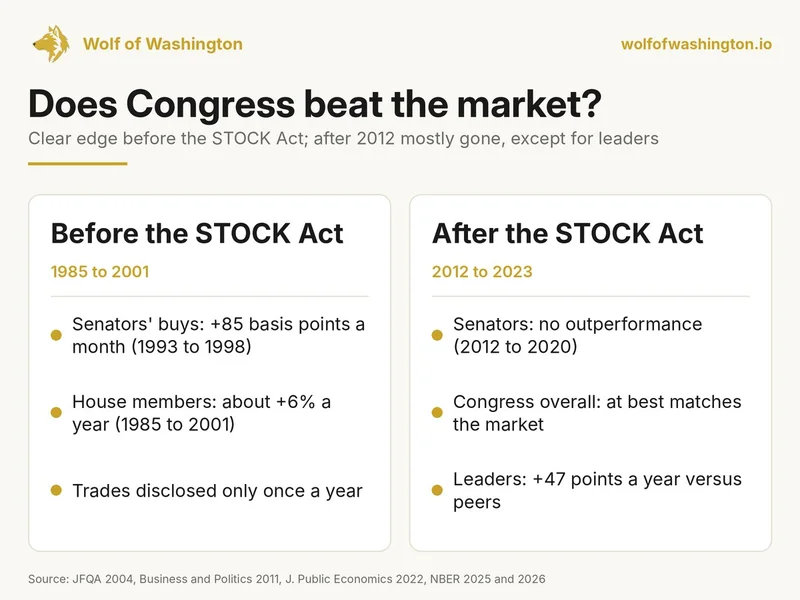
A consistent pattern in congressional disclosure data: lawmakers with the strongest long-term investment records disproportionately hold dividend-paying stocks in energy, defense, financials, and utilities. This echoes a widely cited study of U.S. senators' stock trades from 1993 to 1998, which found average excess returns of about 12% a year (Journal of Financial and Quantitative Analysis, 2004).
Build Passive Income with Congressional Intelligence
Dividend stocks give you income while you sleep. Congressional trading data gives you insight into which dividend-paying sectors the most informed investors in Washington are building positions in — before the earnings reports confirm the thesis.
Our Congress stock tracker lists every reported trade per member.